Fotona Laser Treatments Encino, CA: A Smart Choice for Skin Rejuvenation
Skin rejuvenation tends to attract two kinds of patients. The first group wants visible improvement without surgery, long recovery, or the obvious look that follows overly aggressive treatment. The second group has already tried peels, facials, light-based devices, and a shelf full of products, only to find that texture, laxity, acne scarring, or fine lines still linger. For both, Fotona laser technology often enters the conversation for a practical reason: it is versatile, precise, and capable of addressing multiple concerns with less downtime than many people expect.
That combination explains why interest in Fotona Laser Treatments Encino, CA keeps growing. Patients are not just asking for a laser anymore. They are asking better questions. How much downtime is realistic? Will it help pigmentation and texture at the same time? Is it safe for my skin tone? Can it tighten without making me look overdone? These are the right questions, and Fotona is one of the few platforms that can answer them with some nuance.
What makes Fotona stand out is not a single treatment setting or one trendy procedure name. It is the way the platform combines different wavelengths and delivery methods to treat surface concerns and deeper tissue layers in a controlled way. That flexibility matters in real practice because skin aging is never just one issue. A patient may have enlarged pores, early jowling, old acne scars, redness, sun damage, and a rough texture all at once. A treatment that can be customized to that reality is often more useful than one that only does one thing well.
What Fotona actually is, and why patients hear about it so often
Fotona is a laser platform used in aesthetic medicine for both resurfacing and deeper tissue remodeling. Depending on the handpiece and protocol, it can target water in the skin to improve texture, create controlled thermal effects that stimulate collagen, and support tightening in areas where patients notice early sagging. It is not one single treatment in the way many people imagine. It is more accurate to think of it as a system with several treatment approaches under one umbrella.
That matters because one person may need a light polish with minimal social downtime, while another may need a stronger fractional resurfacing session to address etched lines or acne scarring. In experienced hands, the same platform can serve both ends of that spectrum.
A common source of confusion is that patients hear terms like resurfacing, tightening, fractional laser, collagen remodeling, and noninvasive lift, then assume these are unrelated services. With Fotona, those goals often overlap. A treatment can improve skin quality and stimulate tightening at the same time, though the degree of change depends on settings, treatment area, skin condition, age, and how aggressive the session is.
Why Encino patients often gravitate toward this option
Encino is full of people with active schedules, frequent sun exposure, and high expectations around natural-looking results. That local reality shapes demand. Patients want skin to look fresher, smoother, and firmer, but they usually do not want two weeks of visible recovery unless the payoff is clearly worth it. They also tend to care about long-term maintenance, not just a quick cosmetic fix before one event.
Fotona fits that pattern well. It can be used in staged treatment plans. Someone might start with a series of lighter sessions if their main concern is texture, dullness, mild laxity, or pore size. Another patient may choose a stronger resurfacing treatment if they are willing to accept more downtime in exchange for greater correction. In my experience, this flexibility is one of the strongest reasons the technology earns patient loyalty. It does not force everyone into the same protocol.
The other local factor is cumulative sun exposure. Even patients who have been diligent with sunscreen for years often show signs of earlier damage, especially on the cheeks, around the eyes, on the neck, or across the chest. Fine wrinkling, pigment irregularity, rough patches, and loss of elasticity rarely arrive alone. A platform that can be tailored to mixed concerns tends to perform better in this setting than a one-note treatment.
The skin concerns Fotona can address well
The best candidates are not always the ones with the deepest wrinkles or the most dramatic before-and-after goals. Often, the happiest patients are those who understand that skin rejuvenation is about layers, and that meaningful change can come from improving several moderate concerns rather than chasing perfection in one area.
Fotona is commonly used for uneven texture, enlarged pores, early to moderate skin laxity, acne scars, superficial wrinkles, crepey skin, and some forms of sun-related aging. It may also be used around the eyes and mouth where tissue quality changes tend to show early. For patients who say, “I just look tired and my skin doesn’t bounce back the way it used to,” this can be the right category of treatment.
It is especially useful when the skin needs stimulation, not volume. That distinction matters. Fillers restore volume. Neuromodulators relax muscle movement. Lasers improve the skin itself. Patients often blur those categories, but treatment planning gets better once they are separated. If your concern is etched texture, pore quality, superficial scars, or that papery quality around the lower face, a laser may solve a problem that injectables cannot.
What a consultation should cover before anyone books treatment
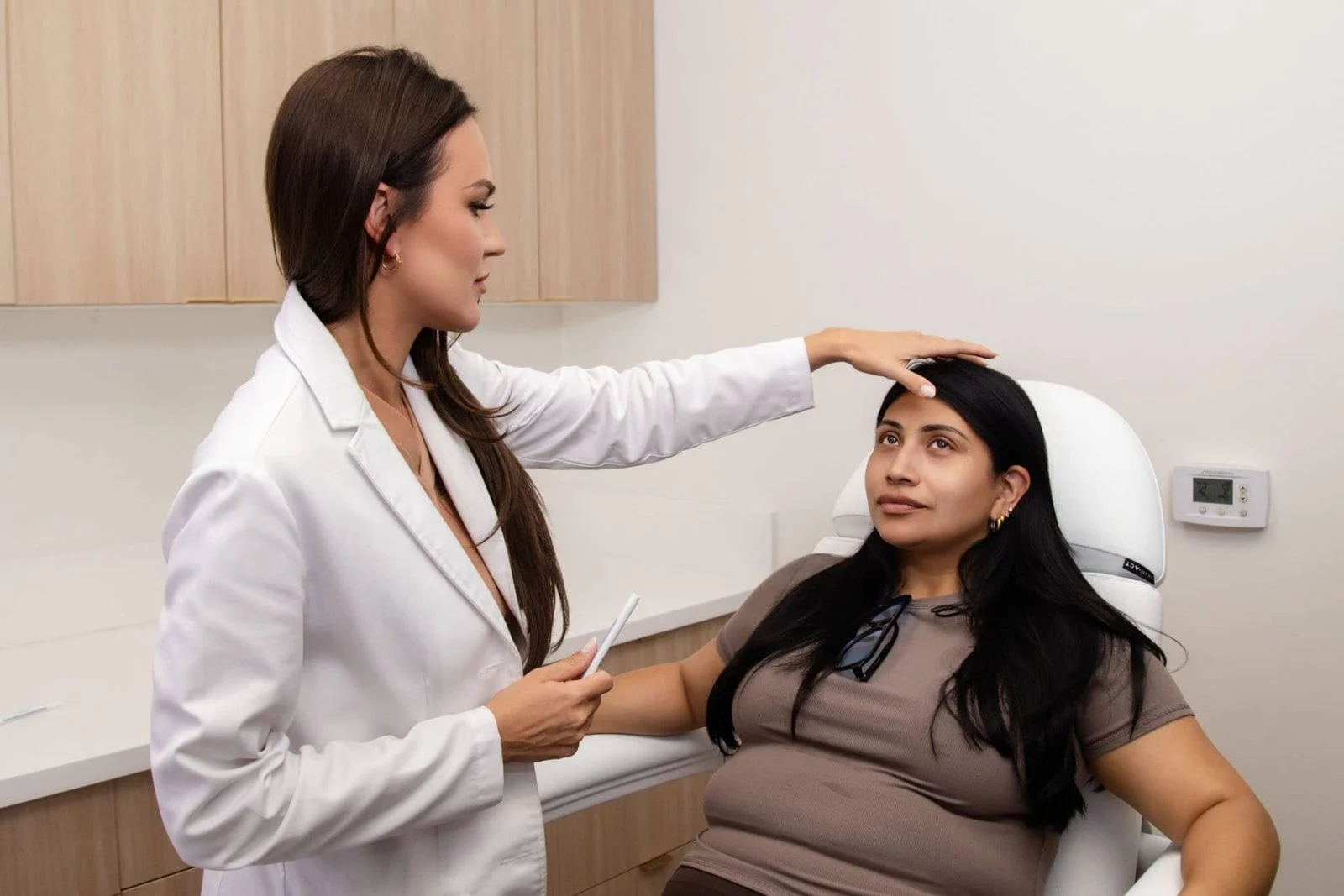
A proper laser consultation is less about selling a session and more about identifying the limiting factor. Sometimes the skin needs laser energy. Sometimes the issue is melasma, active acne, rosacea, significant volume loss, or laxity beyond what a non-surgical treatment can reasonably improve. When patients skip this evaluation, they often end up disappointed for reasons that have more to do with poor matching than with the laser itself.
The strongest consultations usually cover these points:
- your main concern, stated in plain language, not just “anti-aging”
- your actual downtime tolerance, not your idealized version of it
- past reactions to lasers, peels, retinoids, or pigmentation issues
- current medications, recent sun exposure, and active skin conditions
- whether you want gradual maintenance or a more aggressive reset
That conversation guides settings and timing. It also surfaces important safety questions, especially for patients with deeper skin tones, a history of post-inflammatory hyperpigmentation, recent tanning, cold sores, or inflammatory skin disease. Laser treatment can be excellent for many people, but only when the plan respects skin biology.
The treatment experience, from prep to recovery
A lot of anxiety around laser treatments comes from uncertainty. Patients imagine either a trivial spa service or a severe resurfacing ordeal, and reality usually lands somewhere between those extremes.
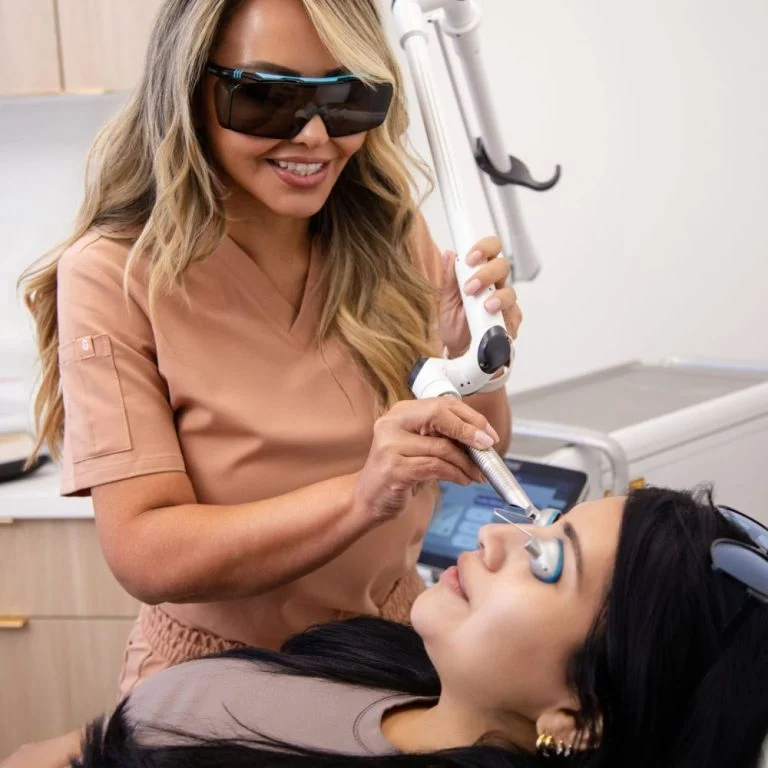
For a lighter Fotona session focused on collagen stimulation or gentle resurfacing, the appointment may be fairly straightforward. The skin is cleansed, eye protection is placed, and the provider moves through the treatment area using selected settings. Sensation varies. Many patients describe warmth, snapping, or a prickly heat. Some protocols require topical numbing, while others are tolerated without much preparation.
Stronger resurfacing sessions are a different experience. They may involve more noticeable discomfort, more visible redness afterward, and several days of recovery while the skin heals. That does not make them a bad choice. It simply means the trade-off needs to be acknowledged honestly. The patient who expects to look camera-ready the next day is usually not a candidate for aggressive settings right before a social event.
Recovery also depends on the goal. Mild treatments may leave the skin pink for a day or two with a sensation similar to a sun-exposed flush. More intensive sessions can involve swelling, bronzing, dryness, and a sandpaper-like texture as the skin renews itself. Good aftercare is not optional. It is part of the treatment.
In practice, the patients who heal best are usually the ones who follow a simple plan: gentle cleanser, moisturizer, sun avoidance, broad-spectrum sunscreen once appropriate, and no picking or overusing active ingredients while the barrier is recovering. Problems often arise when someone decides to “help” the process with exfoliants or heavy skincare too soon.
Results, timeline, and what “improvement” really means
Laser marketing often compresses time in a misleading way. People see a before-and-after photo and assume the change happened overnight. In reality, some effects appear quickly, while others develop over weeks to months.
A freshened surface glow may show up early, especially once the initial redness settles. Texture can improve as the skin turns over. Collagen remodeling, however, takes longer. This is where patience matters. Tightening and dermal support are not immediate in the same way filler is immediate. They build gradually. Most reputable providers will frame this clearly because overpromising is the fastest way to create frustration.
A reasonable expectation for many patients is visible improvement, not total erasure. Fine lines may soften rather than disappear. Acne scars may look shallower and smoother, but not vanish. Mild laxity can improve, especially in earlier stages, though advanced sagging generally still belongs in a surgical conversation. When expectations are calibrated properly, Fotona becomes a very satisfying treatment because it improves skin quality in a way makeup and skincare alone cannot.
Why customization matters more than the brand name
The phrase Fotona Laser Treatments Encino, CA may bring people through the door, but the quality of outcomes depends heavily on who is using the device and how the treatment is matched to the patient. This is where experience matters more than the logo on the machine.
A strong provider looks at pattern recognition. Is the redness vascular or inflammatory? Are the “pores” actually acne scars? Is the lower face concern true laxity, heaviness from deeper structures, or simply rough texture catching light badly? A thoughtful treatment plan often includes staging because not every issue should be treated at full strength in one visit.
I have seen cases where patients thought they needed the most aggressive setting available, when a more measured series would have delivered better healing and a lower risk of pigment trouble. I have also seen the opposite, where someone spent months on mild maintenance when their scarring clearly called for a stronger resurfacing approach. Judgment lives in that middle ground.
For acne scars, texture, and pores, Fotona can be especially valuable
Acne scars are one of the areas where patients often lose confidence because progress can be frustratingly slow. Creams do little. Microneedling helps somewhat. Peels can improve tone but not always the structural depressions. Lasers are not magic, but they are often where meaningful texture change begins.
Fotona can be useful for rolling irregularities, roughness, and enlarged pores, particularly when there is also a need for broader skin refinement. The exact benefit depends on scar type. Deep ice-pick scars, tethered scars, and mixed scarring patterns may need combination treatment, sometimes including subcision or other modalities. That is an important point because laser alone is not the answer to every scar.
Still, for patients whose skin has a generally uneven, pitted, or coarse look under natural light, this category of treatment often produces the kind of improvement that finally makes the skin look calmer and more even, even before full scar correction is achieved.
Around the eyes and mouth, subtle improvements can matter a lot
Perioral and periocular aging often bothers patients more than they expected. It is not always deep wrinkling. Sometimes it is the crepey texture that causes concealer to sit badly or lipstick to feather. Those are quality-of-skin problems, and they respond differently from issues driven by muscle movement or volume loss.
One of the practical advantages of a versatile laser platform is that delicate areas can often be approached with more finesse than broad, one-size-fits-all resurfacing. Fine wrinkling around the mouth, upper lip texture, and early under-eye crepiness can improve in a way that looks refreshed rather than “treated.” The best results in these zones are often understated, which is precisely why patients appreciate them.
How Fotona compares with other rejuvenation options
Patients rarely choose in a vacuum. Usually they are comparing Fotona to microneedling, radiofrequency, chemical peels, IPL, or another resurfacing laser. Each has a place. The right choice depends on the problem being solved.
Microneedling is often easier to tolerate and can be a good starter treatment, but it may be less effective for certain texture concerns or tightening goals. IPL works well for pigment and redness in selected patients, yet it does not resurface the same way. Chemical peels can brighten and refresh the skin but may not create the same degree of collagen remodeling. More aggressive ablative lasers can produce impressive changes, though they usually bring more downtime and a narrower comfort margin.
A simple way to think about it is this:
- choose gentler options when your concerns are mild and your downtime tolerance is low
- choose stronger resurfacing when texture, scarring, or etched lines are the true priority
- choose combination planning when pigment, laxity, redness, and texture overlap
- choose an experienced provider over the newest trend every single time
That last point is not glamorous, but it is the most important one. Good technology helps. Good judgment delivers results.
Safety, skin tone, and why honest screening matters
One of the more important conversations around lasers involves skin tone and pigmentation risk. Some patients Fotona Laser Treatments Encino, CA hear that a treatment is “safe for all skin types” and take that to mean settings can be used casually. That is not how responsible laser medicine works.
Darker skin tones can absolutely benefit from laser treatment, but the approach must account for melanin activity and the risk of post-inflammatory hyperpigmentation. Recent sun exposure, active irritation, and certain skincare products can all raise the stakes. A conservative provider may pretreat the skin, choose different parameters, stage sessions more gradually, or postpone treatment entirely if the skin is not in the right condition.
This is not hesitation for the sake of hesitation. It is discipline. The best laser practices know that avoiding complications is part of producing good cosmetic outcomes. A treatment that technically went as planned but left lingering pigment is not a success.
Cost, value, and what patients are really paying for
Laser pricing varies widely in Southern California, and patients naturally notice that. What often gets overlooked is what drives the difference. It is not just the machine. It is the depth of consultation, provider training, customization, follow-up, facility standards, and whether the plan is built around your skin or around a preset package.
The least expensive option can become costly if it takes too many sessions to get modest change, or if an overly aggressive treatment creates downtime or complications that disrupt work and social plans. By contrast, a carefully planned series may cost more upfront but produce steadier, more predictable improvement.
Patients tend to feel best about the investment when they understand the endpoint. Are you trying to refresh your skin before a milestone event, improve acne scars over six months, or maintain collagen stimulation as part of a long-term anti-aging strategy? Value becomes clearer when the goal is defined.
Who is a good candidate, and who should pause
The best candidates usually have realistic expectations, consistent sun protection habits, and a willingness to follow aftercare. They understand that lasers improve skin biology over time, not by brute force in a single afternoon.
Patients should pause or seek a more detailed medical evaluation if they have active infection, significant irritation, a recent tan, uncontrolled acne flares, certain pigment disorders, or a history of abnormal scarring. People taking photosensitizing medications or those with a tendency toward cold sores around the mouth also need careful planning. None of this makes treatment impossible in every case, but it does mean the timing and protocol need attention.
The most disappointing outcomes often happen when patients rush. A laser should fit into your calendar, your skin condition, and your overall treatment goals. It should not be squeezed in simply because there is an opening next week.
Making the most of Fotona Laser Treatments Encino, CA
When people search for Fotona Laser Treatments Encino, CA, they are usually looking for more than a device. They want a path to skin that looks clearer, smoother, firmer, and healthier without crossing into obvious intervention. That is a reasonable goal, and for many patients, Fotona Laser Treatments Encino, CA Fotona is a smart option precisely because it offers range. It can be light, layered, or more corrective. It can support maintenance or be used as part of a more transformative reset.
The best outcomes come from a simple formula: match the right treatment intensity to the right skin concern, let the skin heal properly, and judge success by quality, not by hype. When that happens, the results tend to look the way good aesthetic work should look, rested, refined, and believable.
OMNIA Wellness Center
Address: 16430 Ventura Blvd Ste 207, Encino, CA 91436
Phone number: +18183868511
FAQ About Fotona Laser Treatments Encino, CA
What is a Fotona laser good for?
A Fotona Laser system is a versatile, dual-wavelength medical laser used primarily for non-surgical skin tightening, anti-aging rejuvenation, and dermatological treatments.
How much does the Fotona laser cost?
The cost of a Fotona laser depends heavily on whether you are looking to purchase a laser machine for a medical practice or are a patient seeking a laser treatment at a medspa.
Is a Fotona laser worth it?
A Fotona laser treatment is generally worth it if you want non-surgical skin tightening, improved texture, and collagen stimulation with very little downtime.